When measured from multiple angles, 2-dimesional video can give great insight into running mechanics, allowing for a frame-by-frame biomechanical analysis. Variables which dictate running patterns (such as overstride, thigh extension, footstrike, and heel whip) can be reliably measured and quantified. Once gathered, the correlation between these components can be calculated and used to make predictions about the effect of each.
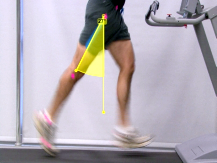
Side view of a runner with motion capture markers and a highlighted angle illustrating peak thigh extension during gait.
Peak Thigh Extension
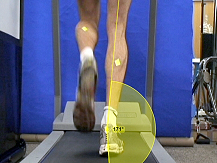
Rear view of a runner on a treadmill with motion capture markers and a highlighted area indicating peak ankle eversion during stance phase.
Peak Ankle Eversion
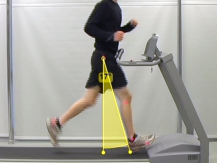
Side view of a runner on a treadmill with motion capture markers and a highlighted triangular overlay showing overstride angle at foot contact.
Overstride Angle
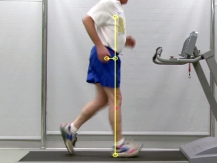
Side view of a person walking on a treadmill with motion capture markers and a vertical reference line illustrating normal stride length and foot placement.
Overstride Distance (Normal)
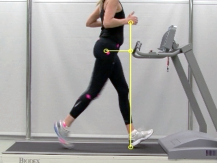
Side view of a runner on a treadmill with motion capture markers and a vertical reference line highlighting excessive overstride distance ahead of the body.
Overstride Distance (Excessive)