
The medial and lateral meniscus are crescent-shaped fibrous pads of the knee joint that provide shock absorption, pressure redistribution, and joint stability contributing to the smooth motion of the knee. However, meniscus tears are among the most common injuries seen by orthopaedic surgeons, and meniscectomy is the most common orthopaedic procedure performed in the United States.
While studies have shown that meniscus tears and partial meniscectomy result in histological changes in articular cartilage and altered tibiofemoral kinematics, it is still unclear if the cartilage changes seen following surgery are a result of the original meniscus tear itself, the partial meniscectomy, or other factors.
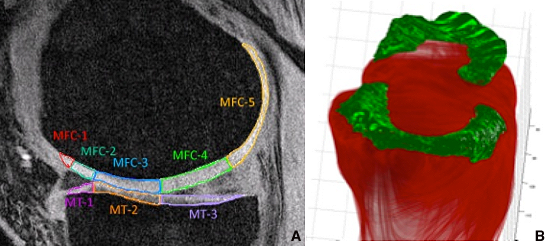
This study utilizes state-of-the-art MR techniques to monitor knee cartilage composition with changes in load across the knee joint. Patients who electively undergo meniscectomy will be evaluated before the meniscus surgery and after the surgery to see the effects on the load of the knee.
The results of this study are necessary to determine how changes in mechanical load across the knee results in biochemical changes in the cartilage. Outcomes from our study could potentially allow clinicians to see sub-clinical early osteoarthritis following meniscus injury and provide a way to measure therapeutic interventions before it is irreversible