
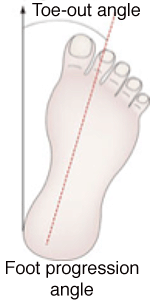
 The angle of an individual’s feet while walking may place exaggerated stress on certain portions of the knee joint, particularly the medial compartment. This exaggerated load leads to altered movement and cartilage degeneration of the knee which may eventually lead to osteoarthritis. The Gait Retraining Pilot is an interventional study that aims to change the way participants walk in order to reduce loading on the medial compartment of the knee joint. The knee adduction moment (KAM) is a biomechanical variable used to measure this amount of loading on the joint, and is linked to the severity of knee pain in people with Osteoarthritis. The cartilage degeneration resulting from high KAM’s can be visualized using T1ρ and T2 relaxation times from MRI.
In a recent study, it was found that a subtle 7 degree change in the foot progression angle (amount of toe-in) can reduce the KAM during walking by 20%, and show a dramatic improvement in both pain and function in persons with moderate knee OA. However, it remains unknown if this intervention may result in improvements (or less decline) in cartilage composition, as quantified by T1ρ and T2 relaxation times. In addition, the effects of gait retraining on the kinematics and kinetics during similar, but different tasks (such as stair climbing), has not been explored.
Therefore, the objective of this study is to determine the effects of 2, six week long, gait retraining interventions (a moderate 7 degree toe-in modification, and a mild 2 degree toe-in modification) on cartilage composition, muscle and joint morphology, pain, function, and kinematics and kinetics during functional tasks in persons with symptomatic and radiographic knee OA.